
Modular Kitchen Interior Design | Vishwa Interior Designer
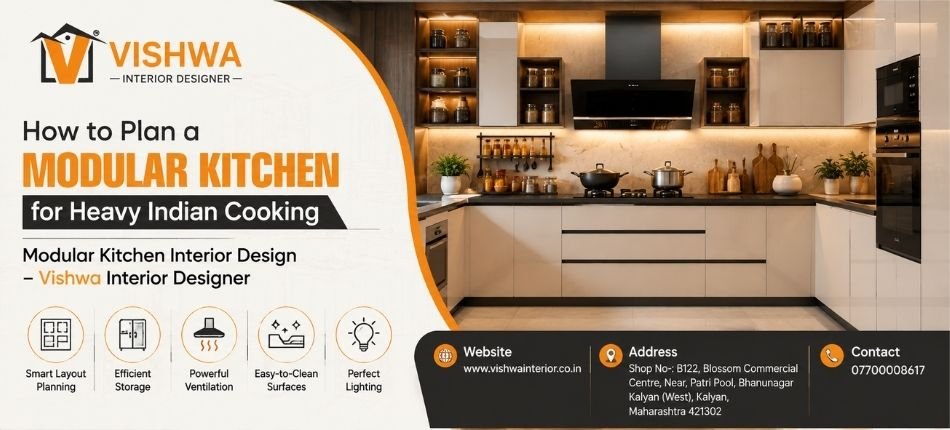
How to Plan a Modular Kitchen for Heavy Indian Cooking | Modular Kitchen Interior Design – Vishwa Interior Designer
Indian kitchens are among the busiest spaces in a home. From preparing rotis and sabzis to deep-frying snacks, making tadkas, grinding masalas and cooking elaborate meals, an Indian kitchen needs to handle heat, oil, moisture, smoke and frequent cleaning. This is why Modular Kitchen Interior Design for an Indian home should focus not only on appearance but also on durability, ventilation, storage and ease of maintenance.
A beautiful kitchen may look impressive when it is newly installed, but if it is not planned according to your cooking habits, maintaining it can quickly become difficult. At Vishwa Interior, we believe that a well-designed modular kitchen should make everyday cooking faster, safer and more comfortable.
Here is a detailed guide to planning a modular kitchen specifically for heavy Indian cooking.
Why Does Heavy Indian Cooking Need Special Kitchen Planning?
Indian cooking typically involves more heat, spices, oil and utensils than many other cooking styles. Pressure cookers, tawas, kadhais, large vessels, mixer-grinders and numerous spice containers are commonly used every day.
The kitchen also needs to deal with oil fumes, steam and strong aromas. Therefore, Modular Kitchen Interior Design for Indian homes needs to consider proper ventilation, heat-resistant materials, easy-to-clean surfaces and sufficient storage.
Instead of planning the kitchen only around current design trends, homeowners should first analyse how the kitchen will actually be used.
1. Start With the Right Kitchen Layout
The right kitchen layout is the foundation of an efficient Modular Kitchen Interior Design, especially for homes where heavy Indian cooking is done every day. The layout should be selected according to the available space, number of family members, cooking habits and storage requirements. L-shaped kitchens work well for compact and medium-sized spaces, while parallel and U-shaped kitchens provide more counter space and storage for families that cook frequently. The refrigerator, sink and cooking hob should also be positioned conveniently to reduce unnecessary movement while preparing meals. A thoughtfully planned layout makes cooking, cleaning and accessing ingredients easier while keeping the kitchen comfortable and organised.
2. Follow the Kitchen Work Triangle
An efficient kitchen should reduce unnecessary movement while cooking. One popular planning principle is the kitchen work triangle, which connects the three major activity zones:
Refrigerator → Sink → Cooking Hob
These three areas should be positioned conveniently so that ingredients can move naturally from storage to washing, preparation and cooking.
A carefully planned work triangle can make daily meal preparation much more comfortable, especially when multiple dishes are being prepared simultaneously.
3. Install a Powerful Chimney and Proper Ventilation
Ventilation should be one of the highest priorities in a kitchen designed for heavy Indian cooking.
Tadka, frying and high-temperature cooking generate oil, smoke, steam and strong aromas. Without proper ventilation, grease can gradually accumulate on cabinets, walls, appliances and ceilings.
A suitable kitchen chimney installed directly above the hob can help extract smoke, grease and cooking fumes. The chimney capacity should be selected according to the size of the kitchen and the intensity of cooking.
Where possible, natural ventilation through a window or exhaust system should complement the chimney.
Good ventilation doesn’t only keep the kitchen comfortable; it can also help protect the kitchen interiors from excessive grease accumulation.
4. Choose Durable and Moisture-Resistant Materials
Material selection is extremely important in Modular Kitchen Interior Design because Indian kitchens are regularly exposed to water, steam, heat and oil.
Cabinet materials should therefore be selected for durability and resistance to moisture. Depending on the project requirements and budget, suitable-quality plywood and other moisture-resistant materials can be considered.
The area around the sink deserves particular attention because it experiences the most water exposure. Poor-quality materials in this area can deteriorate faster.
Instead of choosing materials solely because they look attractive in a showroom, homeowners should consider their durability, cleaning requirements and suitability for everyday Indian cooking.
5. Select an Easy-to-Clean Countertop
The kitchen countertop is constantly exposed to oil, spices, water, food stains and hot utensils, so choosing a durable and easy-to-clean countertop is particularly important for Indian kitchens. Materials such as granite are commonly preferred because they are strong, practical and suitable for regular cooking when properly maintained. The countertop should have a smooth surface that can be wiped easily after preparing rotis, vegetables, curries or fried foods. Apart from appearance, consider heat resistance, stain resistance, durability and maintenance requirements before selecting the material. A practical countertop reduces everyday cleaning effort and helps the modular kitchen maintain a neat appearance for longer.
6. Plan Storage Around Indian Utensils
Indian kitchens usually contain a wide variety of utensils, including pressure cookers, kadais, tawas, large steel vessels, chakla-belans, masala boxes, mixer-grinders and storage containers. Therefore, storage should be designed around these actual requirements rather than simply adding standard cabinets. Deep drawers can accommodate heavy cookware, while dedicated spice drawers, bottle pull-outs, cutlery organisers, corner units and tall pantry cabinets can keep smaller items and groceries properly organised. Frequently used utensils should be placed within easy reach, while larger or occasionally used items can be stored in less accessible cabinets. Smart storage planning keeps countertops clutter-free and makes everyday cooking significantly more convenient.
7. Create a Dedicated Masala and Grocery Zone
Spices are an essential part of Indian cooking, so a dedicated masala storage area can make a noticeable difference.
Frequently used spices should ideally be positioned close to the preparation or cooking area without being exposed directly to excessive heat.
A pull-out spice rack or organised drawer can provide easy access while maintaining a clean appearance.
Similarly, rice, wheat flour, pulses, sugar and other dry groceries can be arranged in a pantry or tall storage unit. Grouping similar ingredients together makes inventory management and meal preparation easier.
8. Keep the Sink and Cooking Area Properly Separated
The sink and hob should not be placed unnecessarily close to each other. Water splashing around an active cooking flame can create inconvenience and safety concerns.
Providing adequate preparation counter space between the sink and hob creates a natural workflow:
Wash → Cut/Prepare → Cook
This simple arrangement can dramatically improve the usability of the kitchen.
9. Choose a Practical Backsplash
The wall behind the cooking area is continuously exposed to oil splashes, masala stains, steam and heat.
A backsplash should therefore be selected for easy cleaning rather than appearance alone.
Tiles, glass and other suitable washable surfaces can be considered. A smooth backsplash with fewer difficult-to-clean joints generally requires less maintenance.
The backsplash can also become a visual feature by complementing or contrasting with the cabinet colours.
10. Provide Enough Electrical Points
Modern kitchens depend on several appliances. Mixer-grinders, microwaves, refrigerators, water purifiers, induction cooktops, chimneys, ovens, air fryers and other appliances all require electrical connections.
Electrical points should therefore be planned before modular cabinetry is installed.
Provide dedicated and safely positioned connections for major appliances while keeping everyday appliance sockets accessible near the working counter.
Planning electrical requirements early prevents the need for inconvenient extensions or modifications later.
11. Use Drawers for Frequently Used Items
Deep drawers can be particularly useful in Indian kitchens because they allow users to access heavy utensils without reaching deep inside conventional cabinets.
Pots, pans, kadais, pressure cookers and steel vessels can be organised in appropriately sized drawers.
Good-quality channels and hardware are important because kitchen drawers may carry substantial weight and are opened many times every day.
Investing in reliable hardware can improve both the functionality and longevity of the modular kitchen.
12. Plan Adequate Lighting
Proper lighting plays an important role in creating a safe, comfortable and attractive modular kitchen. General ceiling lights can provide overall illumination, but additional task lighting should be planned for important work areas such as the cooking hob, chopping counter, sink and food-preparation zone. Under-cabinet lights are particularly useful because overhead cabinets can create shadows on the countertop. Good lighting makes it easier to chop vegetables, check food while cooking and clean surfaces properly. Natural light should also be utilised wherever possible. A combination of natural light, general lighting and focused task lighting can make even a compact kitchen feel brighter, more spacious and welcoming.
13. Keep Cleaning and Maintenance in Mind
Heavy Indian cooking naturally creates more oil and grease, so the kitchen should be designed for convenient cleaning.
Avoid unnecessary decorative grooves and complicated surfaces around high-grease areas. Choose finishes that can be wiped regularly and provide sufficient access around the hob, chimney and sink.
An effective Modular Kitchen Interior Design should continue looking good after years of daily cooking, not just immediately after installation.
14. Don’t Forget Waste Management
Kitchen waste management is another important part of functional design.
A dedicated waste-bin area can be incorporated below the sink or near the food-preparation zone. Where practical, separate bins can be provided for wet and dry waste.
Keeping waste storage concealed but easily accessible helps maintain a cleaner and more organised kitchen.
Common Mistakes to Avoid While Planning an Indian Modular Kitchen
Even an expensive kitchen can become inconvenient when basic planning mistakes are made. Common mistakes include inadequate ventilation, insufficient counter space, poor-quality hardware, inadequate electrical points, lack of storage for large vessels and ignoring the working distance between the sink, refrigerator and hob.
Another frequent mistake is copying a kitchen design from the internet without considering the actual room dimensions and cooking habits of the family.
Every kitchen should be customised around the people who will use it.
Conclusion
Planning a modular kitchen for heavy Indian cooking requires much more than selecting cabinet colours and countertops. The kitchen must comfortably handle heat, oil, spices, steam, heavy utensils and frequent cleaning while maintaining an organised appearance.
From the right layout and powerful ventilation to durable materials, organised storage and convenient work zones, every element contributes to a better cooking experience.
With thoughtful Modular Kitchen Interior Design, you can create a kitchen that is stylish, practical, durable and perfectly suited to everyday Indian cooking.
Looking for Modular Kitchen Interior Design?
Vishwa Interior provides customised interior design solutions to help homeowners create functional, comfortable and attractive kitchens according to their space, lifestyle and requirements.
Modular Kitchen Interior Design Modular Kitchen Interior Design Modular Kitchen Interior Design Modular Kitchen Interior Design Modular Kitchen Interior Design Modular Kitchen Interior Design Modular Kitchen Interior Design Modular Kitchen Interior Design Modular Kitchen Interior Design Modular Kitchen Interior Design
 Previous Post
 Next Post