
Residential Interior Designer in Kalyan | Vishwa Interior Designer
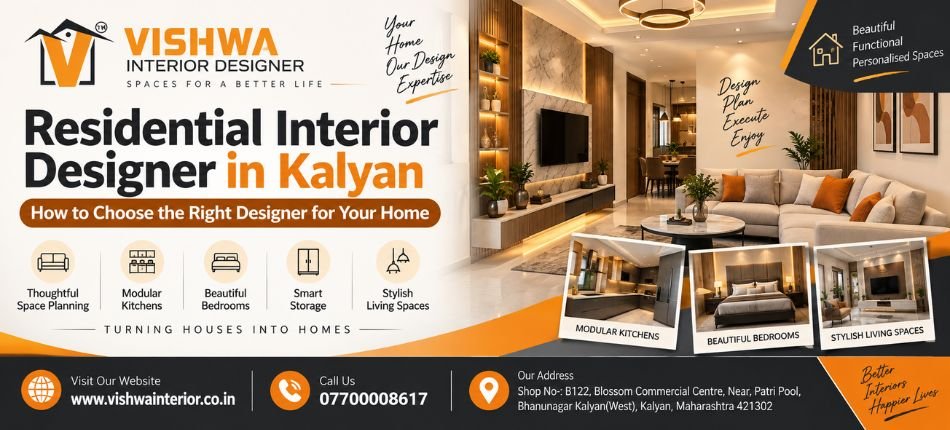
Residential Interior Designer in Kalyan : How to Choose the Right Designer for Your Home- Vishwa Interior Designer
Creating a beautiful home involves much more than choosing attractive furniture, colours, and decorative pieces. A well-designed residential space should provide comfortable movement, practical storage, appropriate lighting, functional furniture placement, and an overall design that suits the family’s lifestyle.
Working with a professional Residential Interior Designer in Kalyan can help homeowners transform their ideas into a practical interior plan. Whether you are designing a new apartment, renovating an existing property, or upgrading selected rooms, proper planning can help you make better use of the available space.
However, choosing an interior designer requires careful consideration. Portfolio, experience, materials, budget, communication, and execution capabilities should all be evaluated before starting your project.
Why Hire a Residential Interior Designer?
Homeowners often know what styles or colours they like but may find it difficult to bring all the elements together within the available space.
A residential interior designer can help plan furniture layouts, storage, lighting, colours, materials, modular units, and other elements while considering the family’s practical requirements.
Professional planning can also identify potential layout or functionality issues before execution begins, when changes may be easier to make.
Understand Your Home Interior Requirements
Before contacting a Residential Interior Designer in Kalyan, identify exactly what you want to design or renovate. Consider whether you need complete home interiors or specific areas such as the living room, modular kitchen, bedrooms, wardrobes, or storage units. Think about your family’s lifestyle, daily activities, and available space. Clear requirements help the designer create a more practical and relevant plan.
1. Review the Interior Designer’s Portfolio
The designer’s previous work can provide useful insight into their experience and design approach.
Look for projects similar to your property type and size. If you own a 2BHK apartment, for example, reviewing relevant 2BHK projects may be more useful than looking only at large luxury homes.
Pay attention to space utilization, furniture placement, storage, lighting, colour coordination, and overall functionality, rather than judging the portfolio only by attractive photographs.
2. Check Residential Interior Design Experience
Residential interiors have different requirements from offices, shops, restaurants, and other commercial projects.
An experienced residential designer should understand practical considerations such as bedroom storage, kitchen workflow, furniture dimensions, family requirements, privacy, lighting, and movement between spaces.
Ask whether the designer has previously handled apartments or homes similar to yours in size and scope.
3. Discuss Your Budget Before Designing
Budget discussions should happen early in the project.
Tell the designer your approximate budget and ask what can realistically be achieved within it. This allows design decisions and material selections to be made with financial limitations in mind.
The budget discussion should ideally cover major components such as modular furniture, materials, hardware, electrical work, lighting, ceilings, painting, labour, and installation, depending on the project’s scope.
4. Evaluate Space Planning
Effective space planning ensures that your home is both attractive and comfortable to use. A designer should consider room dimensions, furniture placement, walking space, natural light, doors, windows, and storage requirements. Proper planning becomes especially important in compact apartments where available space needs to be utilized efficiently. The goal should be comfortable movement without making rooms feel overcrowded.
5. Understand the Materials Being Recommended
Materials influence the appearance, durability, maintenance, and overall cost of your interiors. Ask your designer to explain the materials proposed for wardrobes, modular kitchens, furniture, laminates, countertops, hardware, and finishes. Compare options based on their intended use rather than appearance alone. Understanding specifications beforehand can also help you make better budget decisions.
6. Focus on Practical Storage Solutions
Well-planned storage can help keep a home organized while making better use of available space. Depending on your requirements, a designer may recommend full-height wardrobes, kitchen cabinets, bed storage, TV units, overhead cabinets, or multi-functional furniture. Storage should be planned according to what your family actually needs to store. Avoid adding unnecessary cabinets that make smaller rooms feel crowded.
7. Check Modular Kitchen Planning
The kitchen needs to combine storage, accessibility, workflow, and ease of maintenance.
A Residential Interior Designer in Kalyan should consider cooking habits, kitchen size, appliance locations, ventilation, countertop requirements, and available storage before recommending a layout.
Depending on the available space, homeowners may consider straight, L-shaped, parallel, or U-shaped kitchen layouts.
The appropriate layout depends on the actual dimensions and household requirements rather than simply following a popular design.
8. Pay Attention to Lighting Design
Lighting can significantly change both the functionality and atmosphere of a home.
Residential lighting generally includes different layers:
Ambient Lighting: Provides general illumination throughout the room.
Task Lighting: Supports activities such as cooking, reading, studying, or working.
Accent Lighting: Highlights selected walls, artwork, décor, or architectural elements.
Planning lighting alongside furniture and ceiling layouts can also help determine electrical points before execution begins.
9. Select a Style That Matches Your Lifestyle
Your interior style should complement the way you use your home rather than simply follow current trends. Modern, contemporary, minimal, traditional, or warm-neutral interiors can all work well when chosen according to your preferences and practical needs. Consider maintenance, children, elderly family members, storage, and everyday activities while selecting a style. A balanced design should combine visual appeal with everyday functionality.
10. Understand the Complete Interior Design Process
Before finalizing a designer, ask how the entire project will be managed.
A typical residential interior project may follow:
Requirement Discussion → Site Measurement → Space Planning → Concept Development → Design Finalization → Material Selection → Cost Estimation → Execution → Installation → Final Review
The exact process can vary between designers.
Understanding these stages beforehand makes it easier to know when decisions and approvals will be required.
11. Ask for a Detailed Quotation
Before starting the project, request a detailed quotation that clearly explains the proposed work and major costs. It may include modular furniture, materials, hardware, electrical work, false ceiling, painting, labour, and installation, depending on the project scope. Check what is included and excluded rather than focusing only on the final amount. This also makes quotations from different designers easier to compare.
12. Understand the Project Timeline
Ask your interior designer for a realistic project schedule before execution begins. The completion time can depend on the size of the home, design complexity, custom furniture, material availability, site conditions, and revisions. Understand the major stages of work and when approvals will be required from you. Also discuss how unexpected delays or design changes will be communicated.
13. Evaluate Communication and Transparency
Good communication is important throughout an interior project because homeowners need to make numerous decisions.
During initial discussions, observe whether the designer listens to your requirements and explains recommendations clearly.
A professional working relationship should include transparency about the design, materials, costs, changes, timeline, and scope of work.
The designer should understand your preferences rather than simply applying the same design approach to every home.
14. Clarify What Services Are Included
Interior design packages can vary considerably between service providers, so confirm the complete scope before finalizing. Ask whether the package covers design, material selection, modular furniture, site supervision, electrical work, false ceiling, painting, installation, and finishing. Some designers may provide design-only services while others manage execution as well. A clearly documented scope can prevent confusion later.
15. Ask About Design Revisions and Additional Work
Homeowners sometimes decide to change layouts, materials, colours, or furniture after the project has started.
However, significant changes during execution may affect the budget and timeline.
Before starting, ask how many design revisions are included and how additional work or changes are calculated.
Whenever possible, finalize important layouts and material choices before execution begins.
Choosing Interiors for Different Home Sizes
1BHK Residential Interior Design
A 1BHK generally benefits from careful space optimization. Compact furniture, integrated storage, lighter visual elements, and multi-functional units can help make smaller rooms more practical without making them feel overcrowded.
2BHK Residential Interior Design
A 2BHK requires coordinated planning across the living room, kitchen, master bedroom, second bedroom, and storage areas.
The design can provide each room with its own functionality while maintaining visual consistency throughout the home.
3BHK Residential Interior Design
A 3BHK provides greater flexibility for customized bedrooms, larger storage solutions, entertainment areas, workspaces, and other requirements.
However, a consistent material and colour approach can help maintain continuity between different rooms.
How to Compare Residential Interior Designers in Kalyan
Avoid selecting an interior designer based only on the lowest quotation.
Compare designers based on:
- Residential project experience
- Portfolio
- Space planning approach
- Material specifications
- Scope of work
- Budget transparency
- Project timeline
- Communication
- Site supervision
- Execution process
- Post-completion support, where applicable
Two quotations may look similar in price but include different materials, hardware, services, or quantities. Compare the complete scope rather than only the final amount.
Common Mistakes to Avoid When Choosing an Interior Designer
Avoid choosing a designer only because they offer the lowest quotation or promise the fastest completion. Other common mistakes include not checking previous projects, ignoring material specifications, starting execution before finalizing designs, and overlooking storage or lighting requirements. Frequent changes after work begins can also affect costs and timelines. Careful planning and clear communication can help reduce avoidable problems.
Why Local Experience in Kalyan Can Be Useful
Working with a designer familiar with Kalyan can make site coordination and project discussions more convenient.
Local knowledge may also help with understanding common apartment layouts, material sourcing, contractor coordination, and site visits.
However, location should not be the only deciding factor. Experience, design quality, transparency, and execution capabilities remain important considerations.
Residential Interior Design with Vishwa Interior
Homeowners searching for a Residential Interior Designer in Kalyan can consider Vishwa Interior for planning residential spaces according to individual requirements.
Depending on the project, interior planning can include living rooms, bedrooms, modular kitchens, wardrobes, storage solutions, furniture layouts, lighting, ceilings, and other residential interior elements.
The design process should begin by understanding the family’s lifestyle, available space, preferred aesthetics, functional requirements, and approximate budget. This provides a clearer foundation for developing a practical interior plan.
Conclusion
Choosing the right Residential Interior Designer in Kalyan requires careful evaluation of more than design style alone. The designer should understand your lifestyle, space limitations, storage requirements, budget, preferred materials, and everyday functional needs.
Review portfolios, compare detailed quotations, understand the execution process, discuss realistic timelines, and clarify the complete scope before starting work.
With thoughtful planning and professional design guidance, homeowners can create interiors that combine functionality, comfort, efficient space utilization, storage, and visual appeal while reflecting the needs of the people who live there.
Residential Interior Designer in Kalyan Residential Interior Designer in Kalyan Residential Interior Designer in Kalyan Residential Interior Designer in Kalyan Residential Interior Designer in Kalyan Residential Interior Designer in Kalyan Residential Interior Designer in Kalyan Residential Interior Designer in Kalyan Residential Interior Designer in Kalyan Residential Interior Designer in Kalyan Residential Interior Designer in Kalyan Residential Interior Designer in Kalyan Residential Interior Designer in Kalyan
https://vishwainterior.co.in/best-residential-interior-design-services/r Designer in Kalyan Residential Interior Designer in Kalyan
 Previous Post